
After a series of historically low-ice winters, the Great Lakes made a significant comeback in 2026. Data from the National Oceanic and Atmospheric Administration (NOAA) confirms that ice coverage across the basin peaked at 58% on February 9, marking the highest ice levels seen since 2019.
While the last few years saw the lakes struggle to freeze, 2026 surpassed long-term averages across the board. The surge was driven by an intense cold spell in late January and early February, allowing ice to build rapidly.
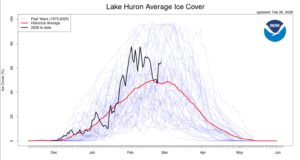
Where the Lakes Topped Out:
Lake Erie: Came within four percentage points of freezing over entirely, peaking at 96% (average is 67%).
Lake Superior: Topped out at 53%, surpassing its long-term average of 48%.
Lake Ontario: More than doubled its typical coverage, reaching 42% compared to the 19% average.
Despite the strong start, the thaw has been swift. In just two weeks following the peak, the Great Lakes lost approximately 43% of their ice cover due to a shift toward warmer February temperatures.
Ice coverage plays a vital role in the Great Lake ecosystem. It protects shorelines from erosion caused by winter storms, helps regulate water temperatures for the coming spring, and supports the spawning cycles of various native fish species.
Read more here.
Listen to Meredith Denning discuss icCBC’s Ontario Morning here.