
Recent headlines highlight the interception of the highly invasive Spotted Lanternfly in Ontario. Although it hasn’t yet established a breeding population locally, experts warn that their invasion poses an imminent threat. While efforts continue to control existing invasive species like zebra mussels, round goby, and Phragmites, a new wave of ecological threats is approaching. Here are some high-risk species moving northward that are not yet established in our Bay, and what actions we must take to keep it that way.
Spotted Lanternfly (Land-based – impacts trees, vehicles, and outdoor gear)
This sap-feeding insect is a massive hazard to Ontario’s hardwoods (such as maple and birch) as well as the agricultural fruit industry. They swarm trees, feeding aggressively until the host plant dies. They are incredible hitchhikers, clinging to cars, camping gear, and boats traveling up from the United States.
How to spot it:
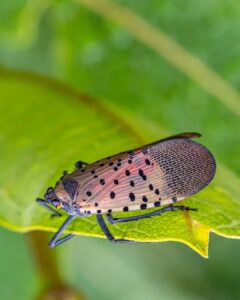 Adults are approximately 3 cm long. When resting, they appear pinkish-grey with black spots. When they hop or fly, they reveal a striking, bright red and black underwing.
Where are they now:
What to do if you see one:
Find out more about the spotted lanternfly here.
Oak Wilt (Land-based – impacts oak trees and forest canopies)
Oak Wilt is a fungus that grows on the outer sapwood of oak trees, restricting the flow of water and nutrients through the tree. An infestation can kill red oak trees in as little as 2 to 6 weeks.
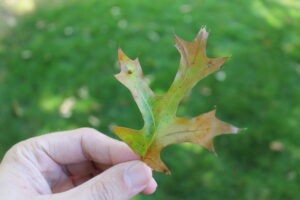 How to spot it:
Where is it now:
What to do if you see it:
See the Oak Wilt fact sheet here.
Hemlock Woolly Adelgid (Land-based – impacts hemlock trees)
Hemlock Woolly Adelgid (HWA) is a tiny, aphid-like insect that sucks nutrients from the base of hemlock needles. It can weaken and kill established trees within a few years.
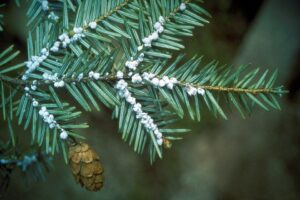
Connecticut Agricultural Experiment Station Archive, Connecticut Agricultural Experiment Station / © Bugwood.org / CC-BY-3.0-US
How to spot it:
Where is it now:
What to do if you see it:
See the Hemlock Woolly Adelgid fact sheet here.
Water Soldier (Water-based – impacts shorelines, wetlands, and open water)
Water Soldier forms dense, floating mats that crowd out native vegetation, alter water chemistry, and severely restrict recreational activities.
How to spot it: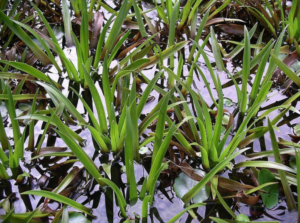
Where is it now:
What to do if you see it?
Read more about Water Soldier here.
Hydrilla (Water-based – grows entirely submerged under the surface)
Hydrilla is an aggressive aquatic plant that can grow rapidly–reaching lengths of 7.5 metres. It dramatically degrades water quality by blocking sunlight, decreasing oxygen levels, increasing pH and water temperatures. These thick underwater blankets can also clog water intake pumps, and make boating and swimming nearly impossible.
How to spot it:
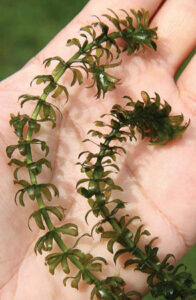 Stems grow underwater, featuring pointed, green leaves with serrated edges.
Where is it now:
What to do if you see it:
Read more about Hydrilla here.
Concrete Steps You Can Take Right Now To Prevent Spread
Awareness is only half the battle. To keep these invaders away, weave these three non-negotiable rules into your cottage and travel routines:
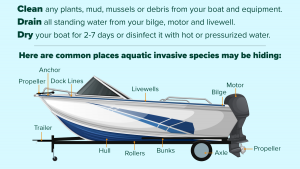
 1. For Boaters & Anglers: “Clean, Drain, Dry”
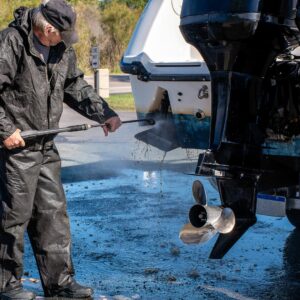 Before you pack up your boat, jet ski, canoe, or trailer to head to Georgian Bay (especially if you’ve been in Lake Simcoe or southern river systems):
Never dump leftover bait into the water or on the shoreline. Put it in the trash.
 2. For Campers & Property Owners: “Buy Local, Burn Local”
Moving firewood is the single fastest way to spread forest killers like Oak Wilt and Hemlock Woolly Adelgid.
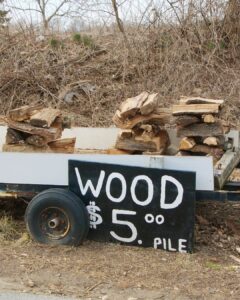 Leave the wood at home: Buy your campfire wood directly within the town or neighborhood where you are staying on the North Shore or East Coast.
 3. For Landowners & Hikers: “Don’t Prune & Brush Your Boots”
 See Something? Snap It, Catch It, Report It
If you spot something suspicious on your property, on the trails, or in the water, follow this protocol:
 Snap It: Take a clear, close-up photo. If possible, place an item like a coin or sunglasses next to it for scale.
By staying alert and reporting what you see, you are helping ensure this new wave of invasives don’t become the Bay’s next major problem.
Additional information on these and other invasive species, along with instructions on how to report a sighting, can be found on the Ontario Invasive Species website here.